Designing for Partners. Shaping the Platform.
Hopper Travel Booking | Platform Design · Partner Success
I worked at the intersection of partner success, product design and platform strategy at Hopper, helping partners bring flight, hotel and car booking into their own apps. Beyond delivering tailored experiences, I translated partner feedback into product, design and accessibility improvements that benefit the wider platform and partners alike.
26% higher gross revenue · 13% higher booking conversion · 20% higher AOV
Nubank Brazil · Platform migration · A/B tested against legacy
The challenge
Hopper needed a shared platform that could power travel booking across different partner apps without compromising each partner's experience. Imagine the Shopify of travel. That meant balancing partner-specific requirements with scaleable reusable components, regional pricing and language conventions, accessibility, and the realities of Hopper's product roadmap and engineering capacity.
My role was to bridge both sides: deliver for partners while advocating for improvements that could benefit the wider platform.

Nubank Brazil: from legacy to platform
Nubank is a large digital first bank in Brazil. We migrated their travel booking experience NuViagens (Nu-Travel) to Hopper’s new platform, tailoring it specifically to Nubank's user segments. This included end-to-end journeys for hotel and flights search and booking, embedded seamlessly in Nubank’s core app.
Nubank - hotel search
I adapted platform base features to meet Nubank’s needs, adding:
Users earn points on each booking which can be used towards future bookings.
Users can pay in up to 6 instalments interest free using NuPay.
Custom Brazilian ID fields to support local compliance requirements.
A streamlined checkout that combined traveller details into a single page.
Portuguese-language journeys and Brazilian real pricing.
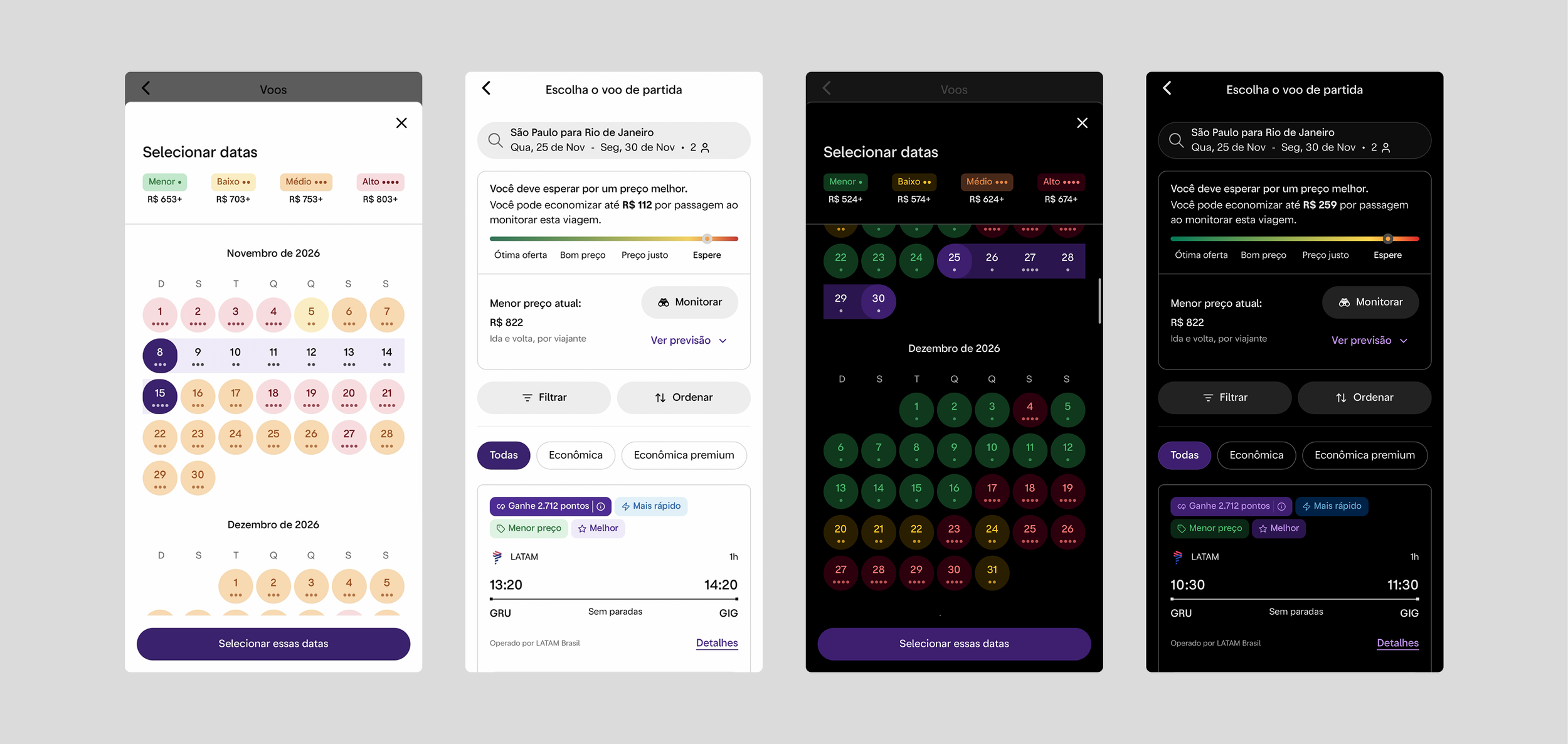
Light and dark themes to fit the partner experience.
The design updates aligned the features and platform capabilities to Nubank’s strong product-market fit, combining flexible payments, with loyalty point accrual for customers in premium segments. Giving users compelling reasons to choose NuViagens over other travel booking platforms, and return to book their next trip.
Measuring impact
We ran a one-month, 50/50 A/B test comparing the new platform against the legacy hotel-booking experience on NuViagens, which has approximately 90,000 monthly users on travel.
The platform outperformed legacy across commercial performance and customer satisfaction:
+13%
Booking conversion
13.30% → 15.03%
+26%
Gross revenue
Stays (hotels)
+0.17
CSAT points
4.25 → 4.42
+20%
Average order value
$328 → $394
The conversion and AOV uplifts were measured during the period when pricing was comparable across both experiences. Gross revenue and CSAT results reflect the full experiment.

Uber: Turning a partner-specific improvement into a platform pattern
Fare comparison
Uber's existing fare comparison made it difficult for users to understand what each fare included, with fare types listed vertically, which resulted in too much scrolling to compare the inclusions.
I redesigned the experience around horizontal fare tabs, categorised inclusions and prioritised top filters (bags and cancellation), making options easier to compare by chunking information, while preserving flexibility to mix and match fares. I also added new baggage icons for scanability.
An A/B test showed an 18% conversion uplift over one month. The improved pattern was subsequently rolled out as the platform's default air-fare comparison, extending the improvement to all partners on the platform.
Uber - fare comparison - dark mode
Uber - flight search
Flight booking journey
What else did we deliver for Uber’s flight booking flow?
Flight search accessible from home screen for maximum discoverability.
Recent searches remembered for easy repeat searches.
Date picker with pricing indicators in calendar to see best prices.
Price analysis for tips on when to book.
Watch flight functionality to catch the best price.
Building for scale
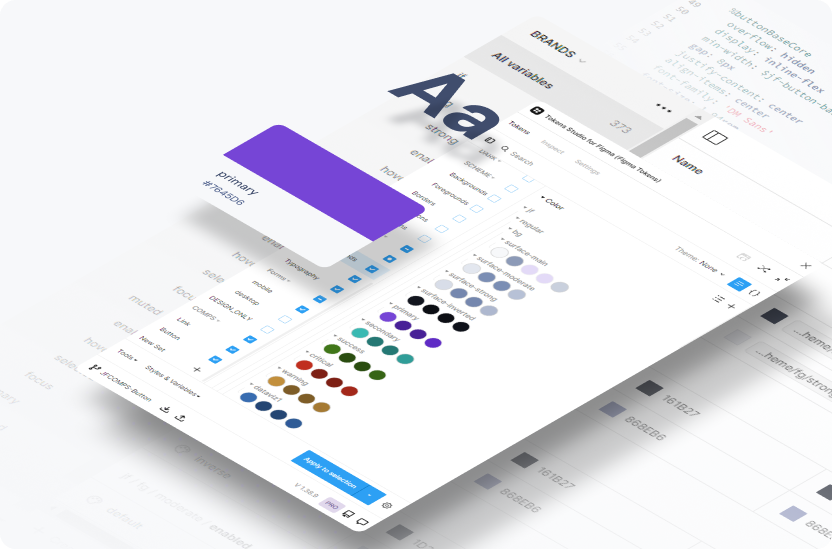
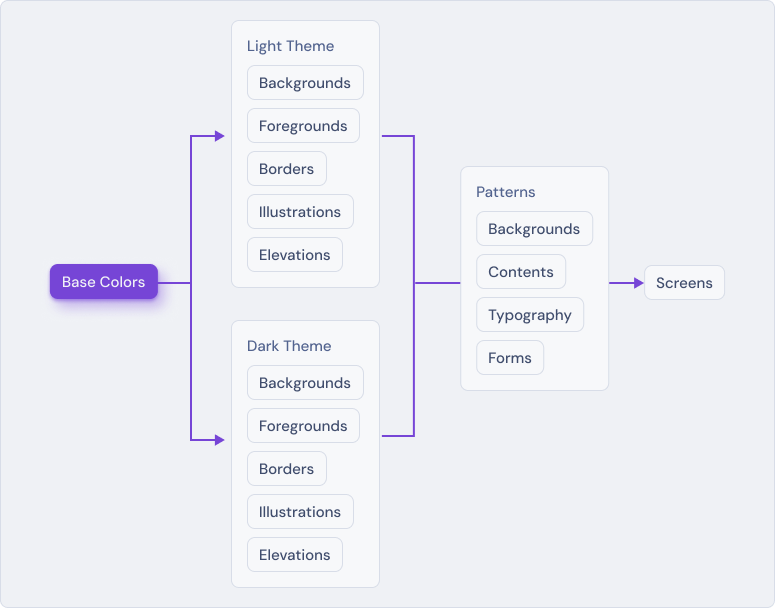
To reduce duplicated design and implementation effort across markets, I created reusable design patterns, components and design-system tokens.
The goal was to move from partner-by-partner implementation towards configurable platform foundations, making shared UI and features easier to maintain and evolve across different partner experiences.
This work also created opportunities to address recurring partner needs once at the platform level, rather than solving the same problems independently for each implementation.

AI-assisted workflows
I use AI agents to reduce manual work, improve design quality and streamline collaboration across Design, Product and Engineering. I choose the tool based on the task, its access to the relevant tools and artefacts, the level of control required, and review before implementing/sharing.
01 · Synthesising design feedback
Claude Code · Chat GPT · Turn scattered Figma comments into prioritised, traceable themes.
-
Connect to Figma and review all comments in this Figma file. Prepare a summary of all key themes, with links to comments. Help me triage by most important and frequent.
Review this Google Sheet of customer feedback in {Portuguese} and prepare a summary of key themes and metrics, as well as identified areas for improvement. Include quotes where relevant.
02 · Auditing design consistency
Figma Agent · Find inconsistencies without breaking design-system foundations.
-
Review flows for any data and language inconsistencies, and provide a list of proposed updates for me to approve. Do not change any tokens, fonts or detach components. Flag for manual update anything you can’t update yourself that needs it.
Review all screens and identify if any HEX codes are in use instead of colour tokens.
03 · Localisation
Figma Agent · Maintain consistent language and regional conventions across a localised customer journey.
-
Update screens to {Brazilian Portuguese}, keeping language choices consistent across flows.
Update all dates and times to {Brazilian} format, e.g. {Seg, 30 de Nov}. Keep choices consistent across flows.
04 · Connecting design to engineering
Claude Code · Turn design-system changes into actionable, linked communications.
-
Connect to Jira and prepare a ticket on {PS Atlantic board} describing this new {token/component - figma link}. Tag the relevant team and project, and let me review it here first.
Connect to Slack and prepare a short post in {#dev_tokens_new} to describe the new {token/component}. Follow the same format as previous posts, keep it brief, and link the relevant ticket. Flag any need-to-know information for engineering.
Prepare a summary of my recent design system updates to share in Slack with Product and Engineering.
05 · Optimising UI copy & communication
ChatGPT · Meet strict interface constraints without sacrificing natural language.
-
Shorten this {Portuguese} UI copy, max 24 characters. Keep it natural for a booking flow.
Review this email to an external partner, to make it more succinct and clearer.
06 · Design exploration & review
Figma Agent · Claude Code · Rapid ideation and identifying friction points.
-
Design exploration · Figma Agent
Create 5 example mobile screens that ask a user to {job to be done}. The user should feel {reassured}. Provide alternative CTA copy options. Use the platform design system and tokens only, with theme set to {partner}.
Flow critique · Claude Code
Review the flows in Figma, share critique and consider any missed edge cases.
07 · Workflow skills, planning and handovers
Claude Code · Automating planning where possible.
-
Project timelines
Review my Jira dashboard of open and in progress tickets, and create a Gantt chart with linked tickets in Google Sheets, to share with my manager.
Weekly planning
Based on my Jira dashboard, create a weekly summary of my open and upcoming tasks. Schedule alert at 08:30am on Mondays.
Leave handovers
Based on my Jira dashboard, create a 2-3 page summary in Google Docs as a handover document while I’m on leave between {X dates}.
Workflow optimisation
Review how other product designers in the Hopper team have set up their Claude Code to work best with our ecosystem and design system for Platform. Make suggestions on what other skills, integrations and/or processes I should implement to work most efficiently and collaborate with Design, Product and Engineering.
One platform, multiple partner experiences
Beyond Nubank and Uber, I also led design on multiple partners globally including Lloyds, Trainline, Santander and Yahoo - with the platform now supporting their travel-booking experiences.
Each implementation brings different partner requirements, customer expectations and market considerations. Together, they illustrate the role of a shared platform in enabling tailored experiences without rebuilding the entire product for every partner.