Immutable Passport Rewards
How I helped grow a new Web3 gaming ecosystem from 300k to 1M users in 1 month
The challenge
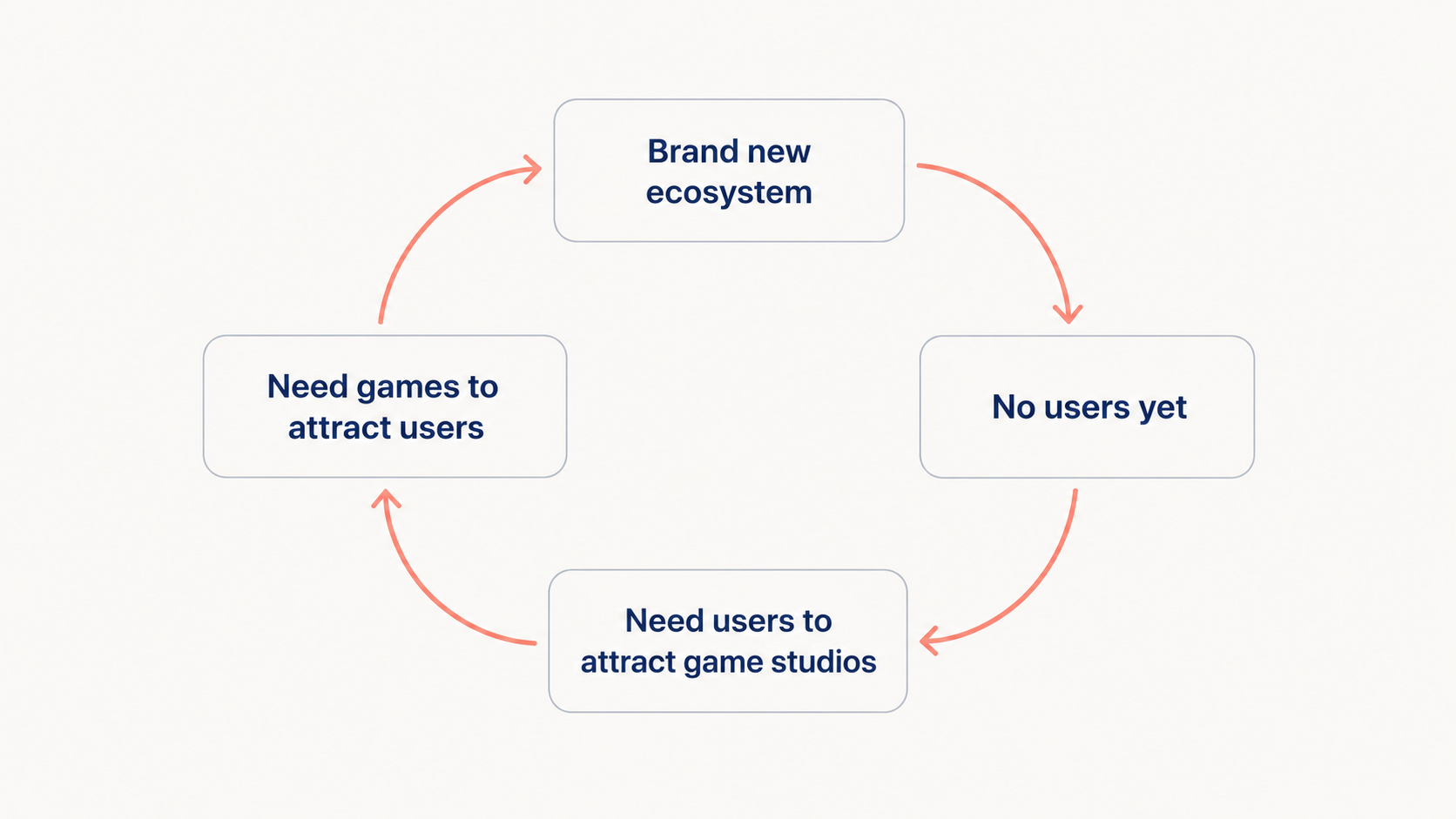
Immutable was building Passport as the wallet and identity layer for a new Web3 gaming ecosystem. The problem was a classic cold start:
No games → no players → no reason for game studios to join → no ecosystem
With many web3 games still in development, we needed to give users a reason to create a Passport wallet and start transacting on-chain, and get game-ready.
My role
We formed a cross-functional growth hacking squad with the single focus to grow the Passport user base. As Senior Product Designer, I shaped the user experience across the campaign, designed and iterated on growth mechanics, and worked with the product, engineering and product marketing to turn daily performance signals into new experiments.
Find the highest-leverage opportunity
The immediate business goal was to demonstrate that the chain was active by getting users to create wallets and transact.
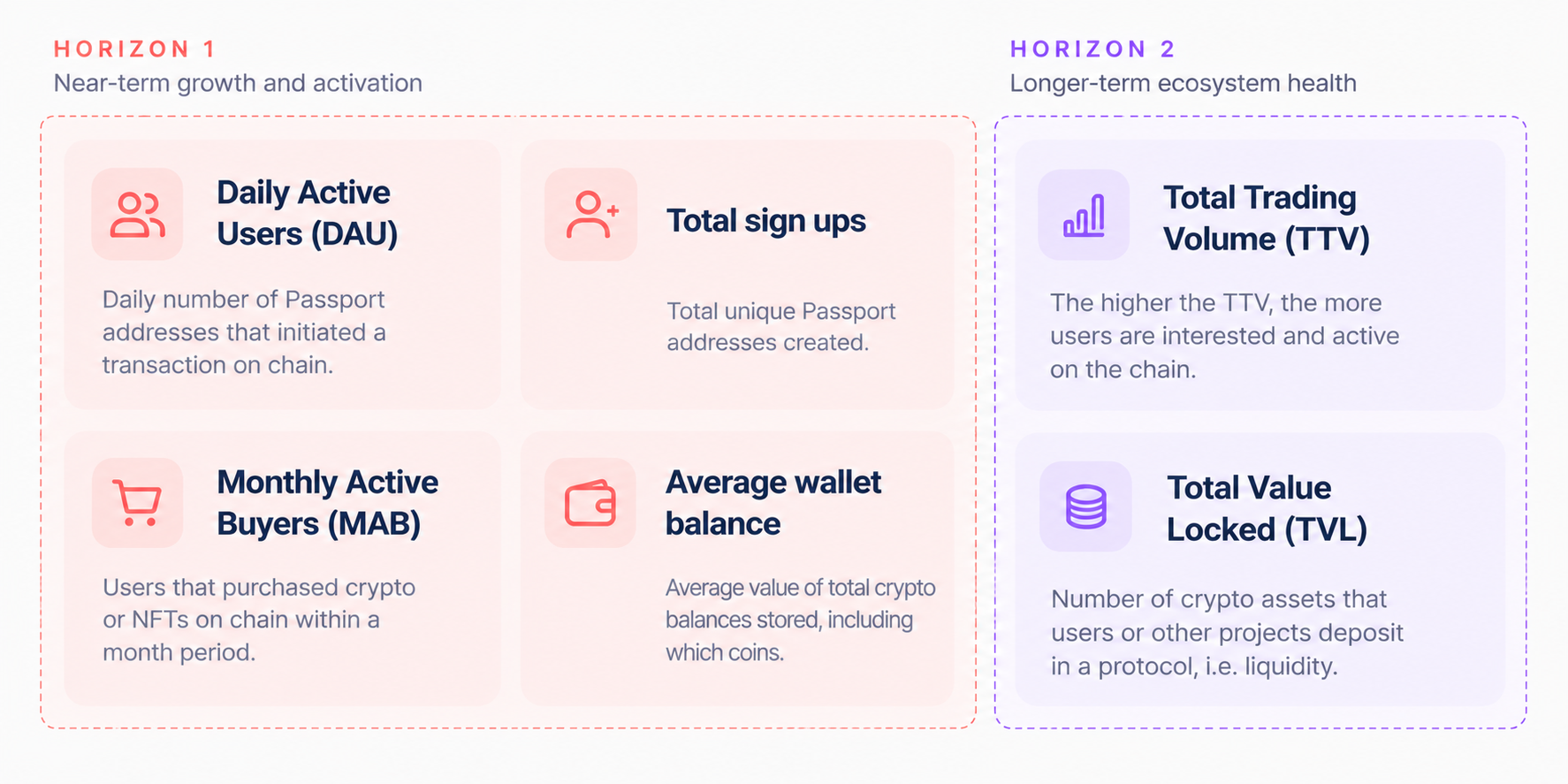
We identified several metrics that could show whether Passport was gaining traction:
Total sign-ups
Daily Active Users (DAU)
Monthly Active Buyers (MAB)
Total Trading Volume (TTV)
Total Value Locked (TVL)
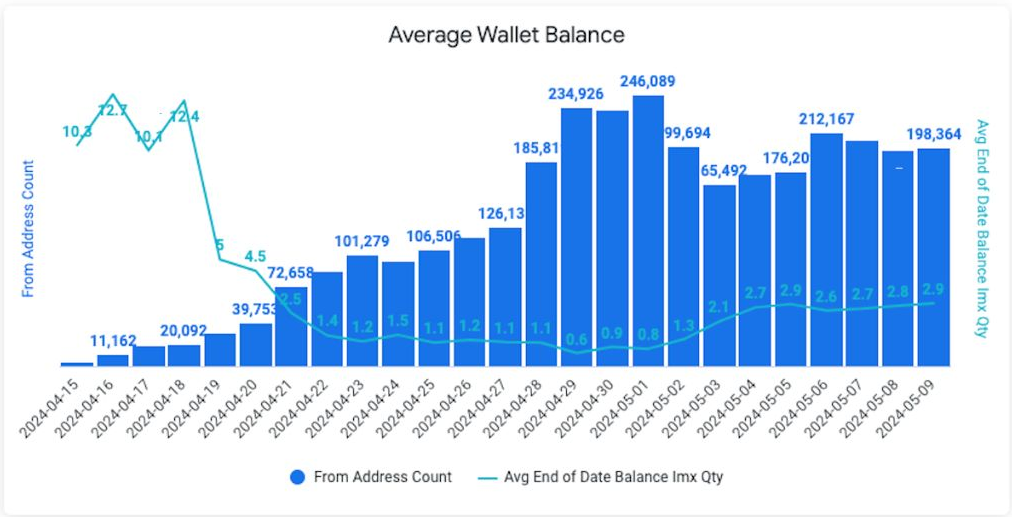
Average wallet balance
The near-term opportunity was clear: Create a reason for users to transact before the games were available, without relying solely on airdrops.
North star signals
How might we create meaningful product activity before the ecosystem is mature enough to attract users?
Leverage known behaviours: Early adopters, airdrop hunters/farmers, and web3 gamers
Start and scale network effects: A product or service’s value increases as more users engage with it
Incentivise virality: Attract new users through viral growth, word of mouth and rewards - users who feel they ‘got in early’ are most likely to promote the ecosystem
Turn a transaction into a product experience
We wanted to generate more on-chain events to show network growth. A Passport transaction could be as simple as confirming a wallet prompt, and could cost the user nothing. So we gave users a reason to complete simple on-chain actions by turning them into a game. This became the foundation for a series of rapid growth experiments.
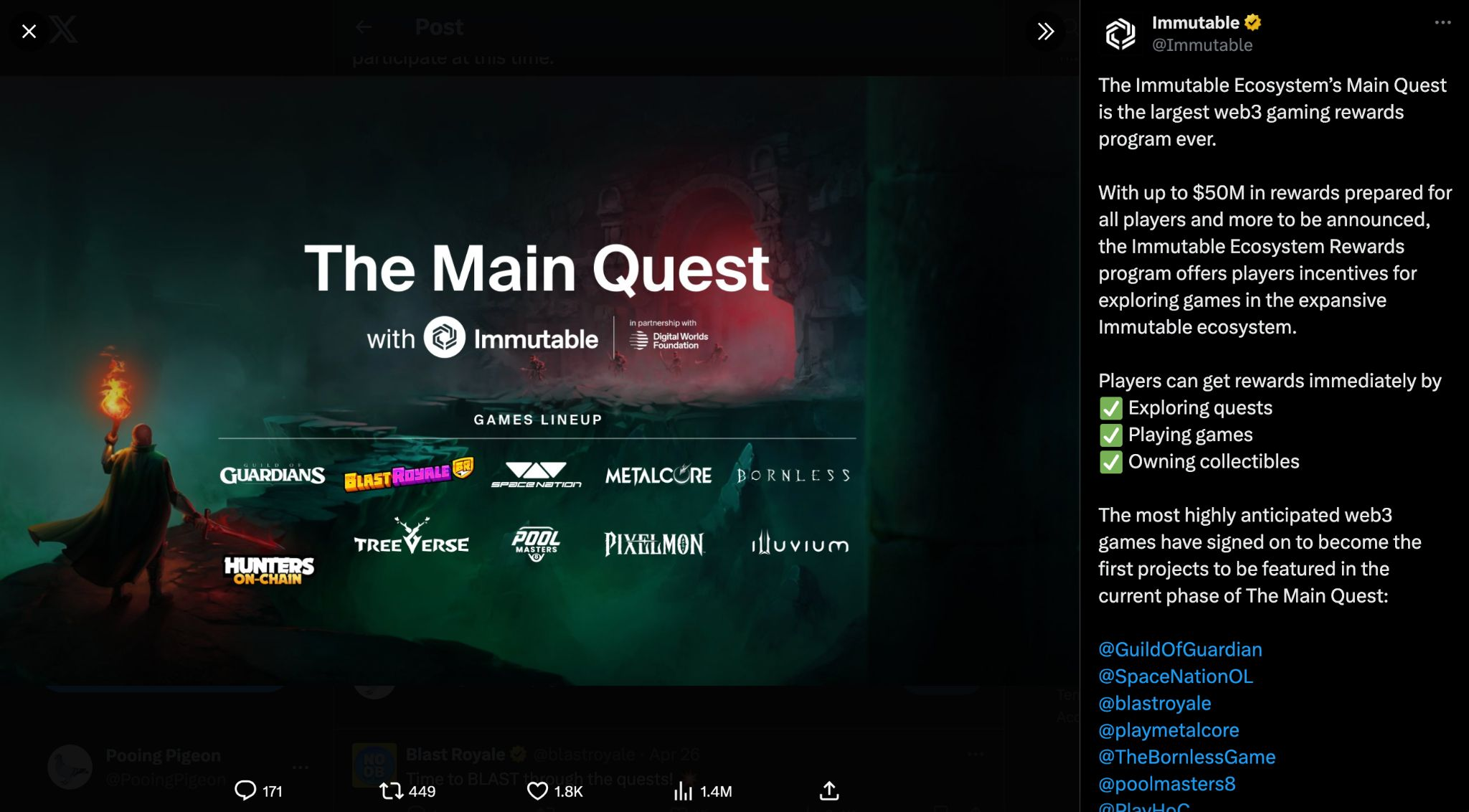
Experiment 1: The Main Quest
The first concept was designed around mystery, anticipation and exploration. The intention was to create curiosity and virality, without promising a specific future reward, while using existing Web3 communities and influencers to drive awareness.
Design principles
Use mystery to drive speculation and engagement. Hint at rewards, without locking the product into promises too early
Use social proof to signal legitimacy and generate FOMO
Speak to gamers in their language: Quests, side quests, loot and rewards
Reach airdrop farmers through virality: Crypto influencers, Immutable advocates, and popular airdrop aggregators such as Bankless Airdrop Hunter
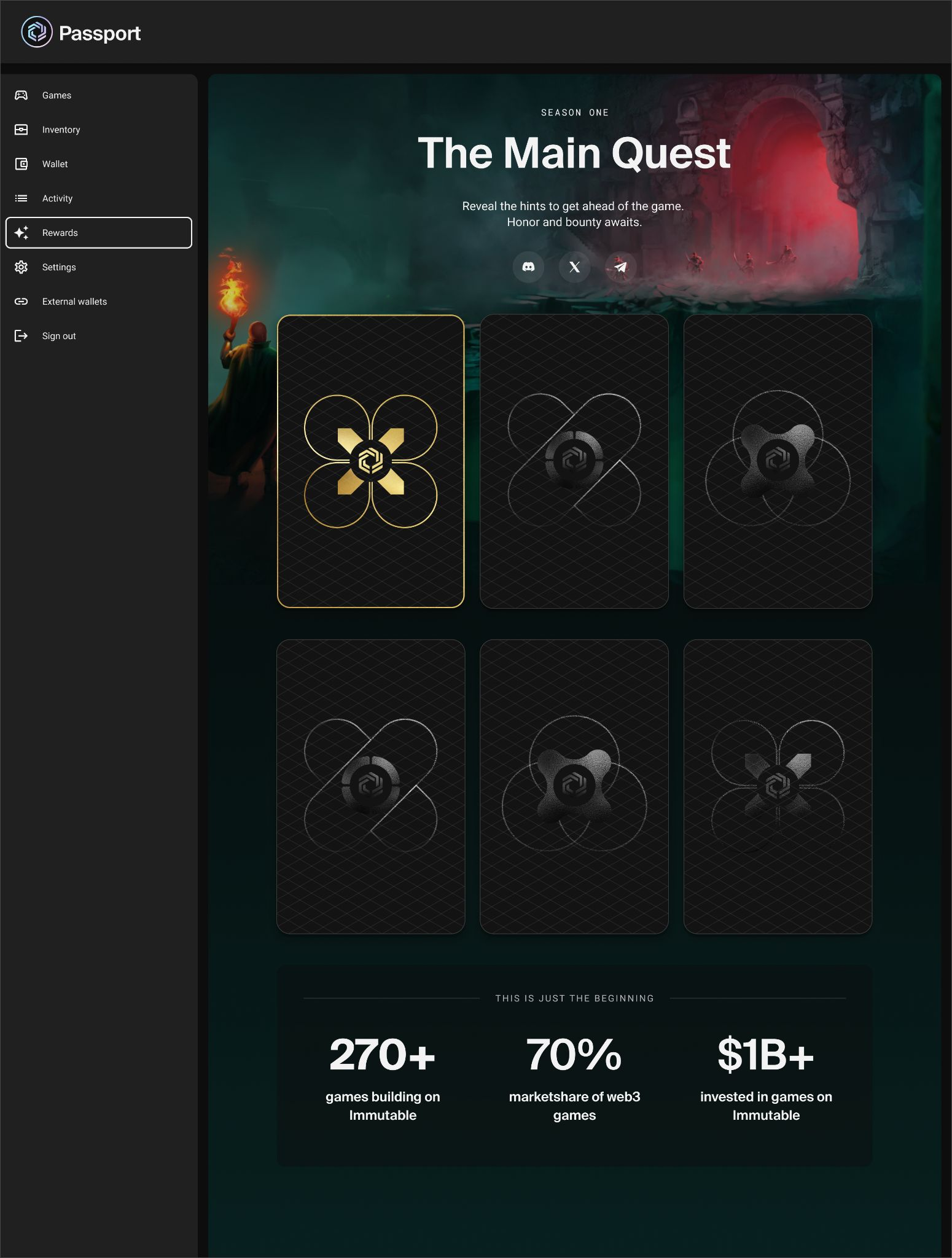
Main quest - landing page
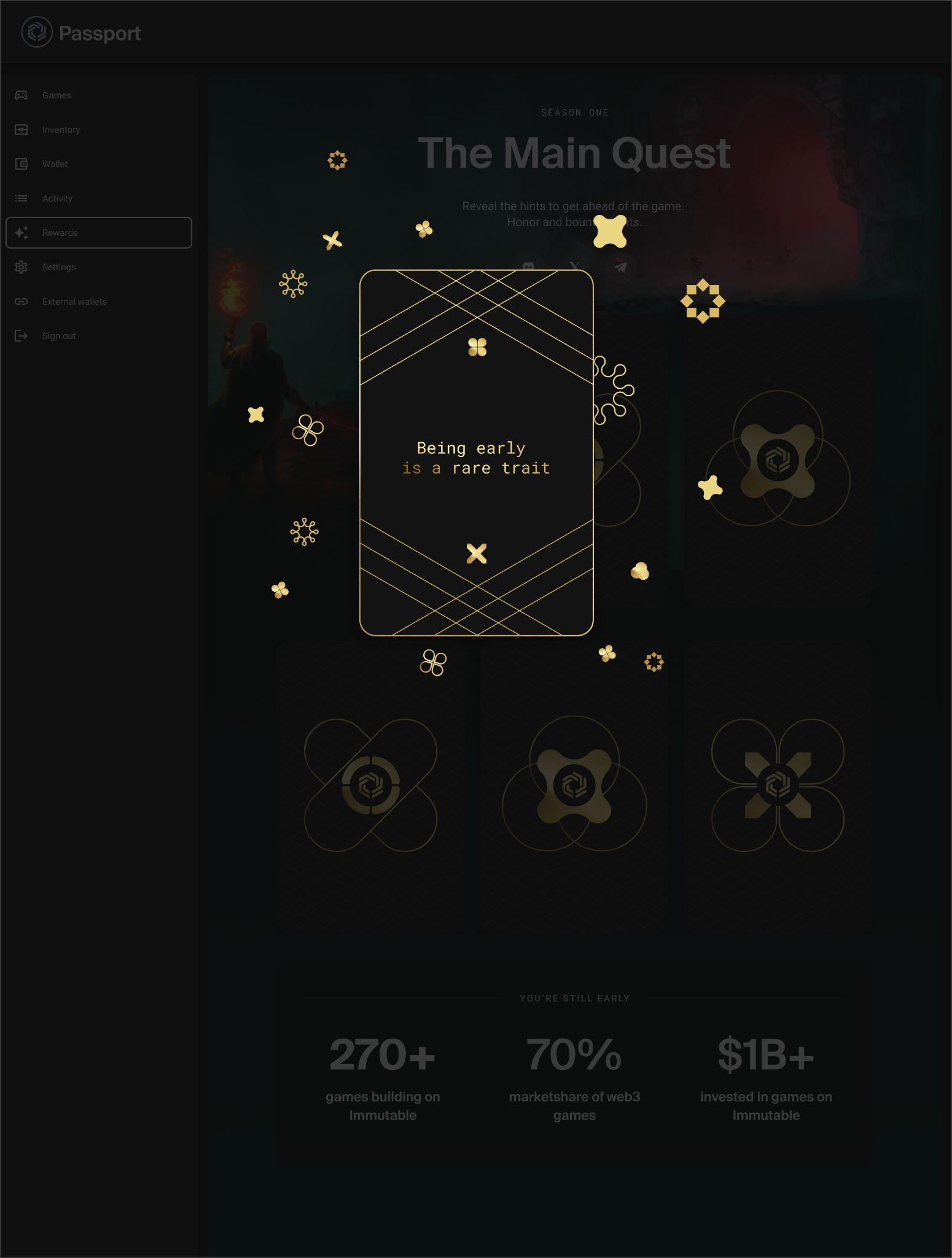
Main quest - card reveal
Experiment 2: Cards Reveal
Card reveal animation
I then turned the experience into a recurring interaction. Think:
Advent calendar × treasure hunt × product-growth experiment
Users received cards containing clues and suggested tasks designed to increase the target metrics. Rather than releasing everything on a fixed schedule, cards were revealed at irregular intervals to encourage speculation and conversation.
Fast experimentation didn't mean sacrificing delight.
We deliberately kept the interaction lightweight. For example, we used existing JavaScript animation libraries for the reveal to add the visual polish users expect, rather than investing engineering time in custom animation.
Experiment 3: Gems
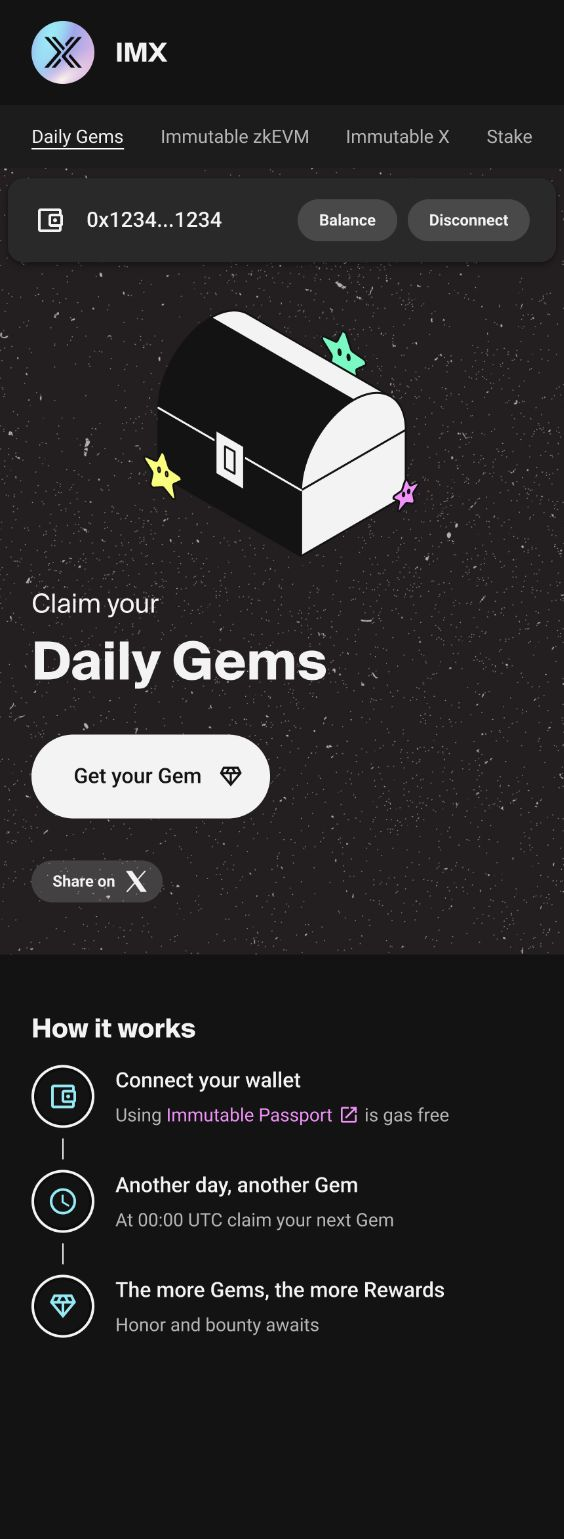
The next iteration introduced Gems as a persistent engagement mechanic.
Users could:
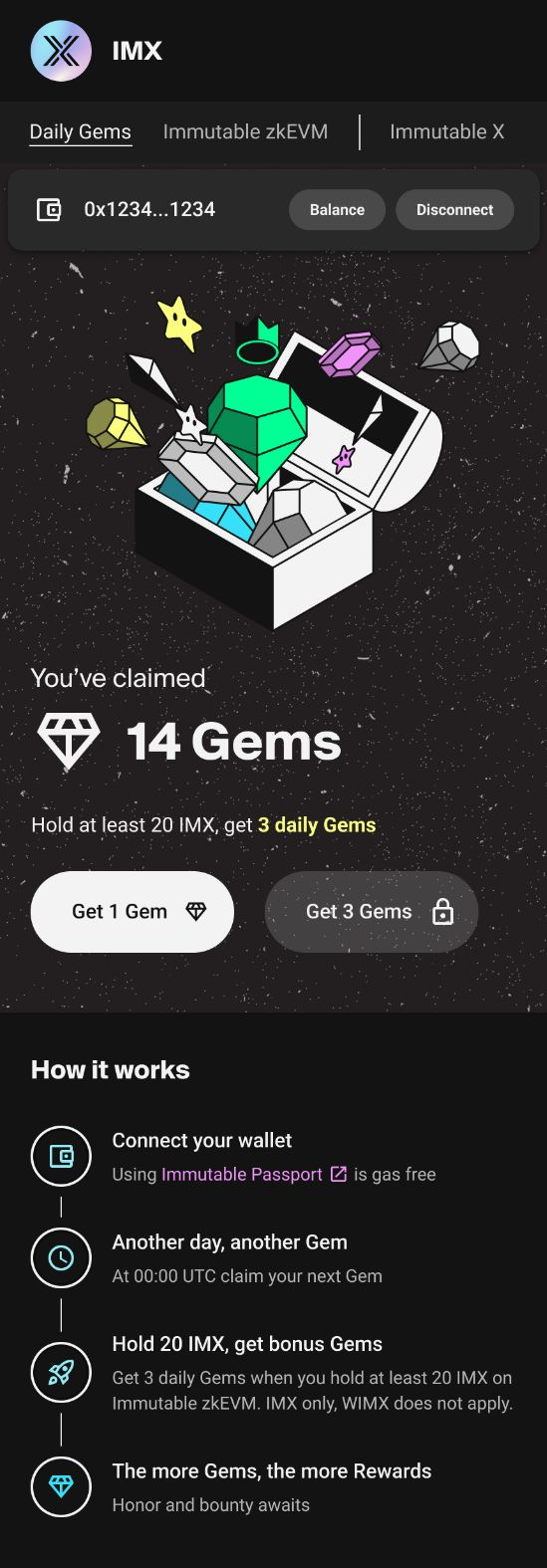
claim Gems daily
build a streak
earn more Gems through activity
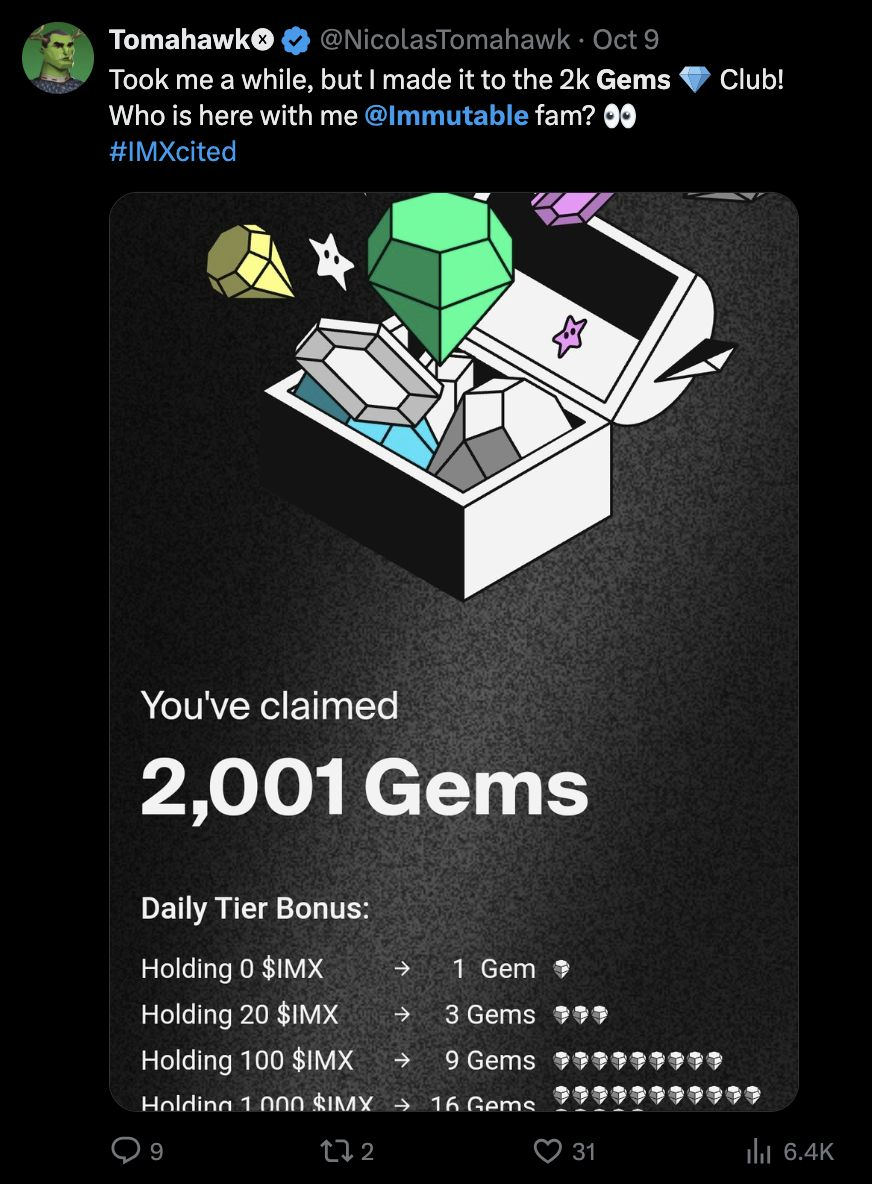
receive multiplier bonuses for holding $IMX (Immutable’s native token)
accumulate Gems towards future rewards
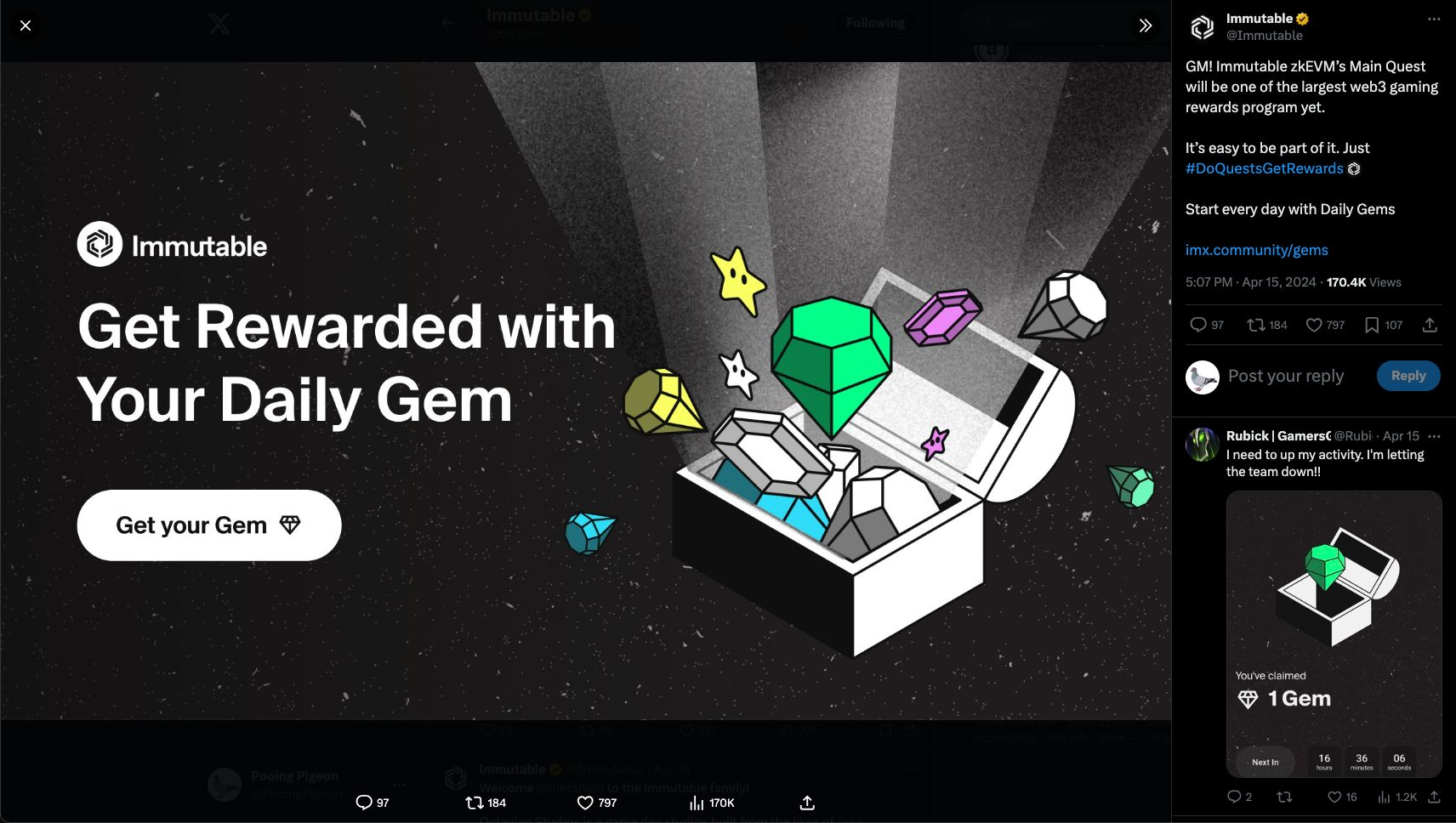
I deliberately built in proven behavioural mechanics including:
goal-gradient effect
social proof
competition
randomised rewards
loss aversion / FOMO
The goal wasn't simply to add gamification. It was to create a repeatable reason to return and transact.
Users initially received a random number of Gems, introducing uncertainty and anticipation. The chest-opening illustration reinforced this sense of reward and added momentum, with more Gems appearing as balances grew, to make progress feel visible rather than abstract. We then introduced bonus Gems for holding IMX in Passport, directly incentivising growth across key metrics: total sign-ups, daily active users, monthly active buyers, total value locked, and average wallet balance.
Build the growth loop into the product and ecosystem
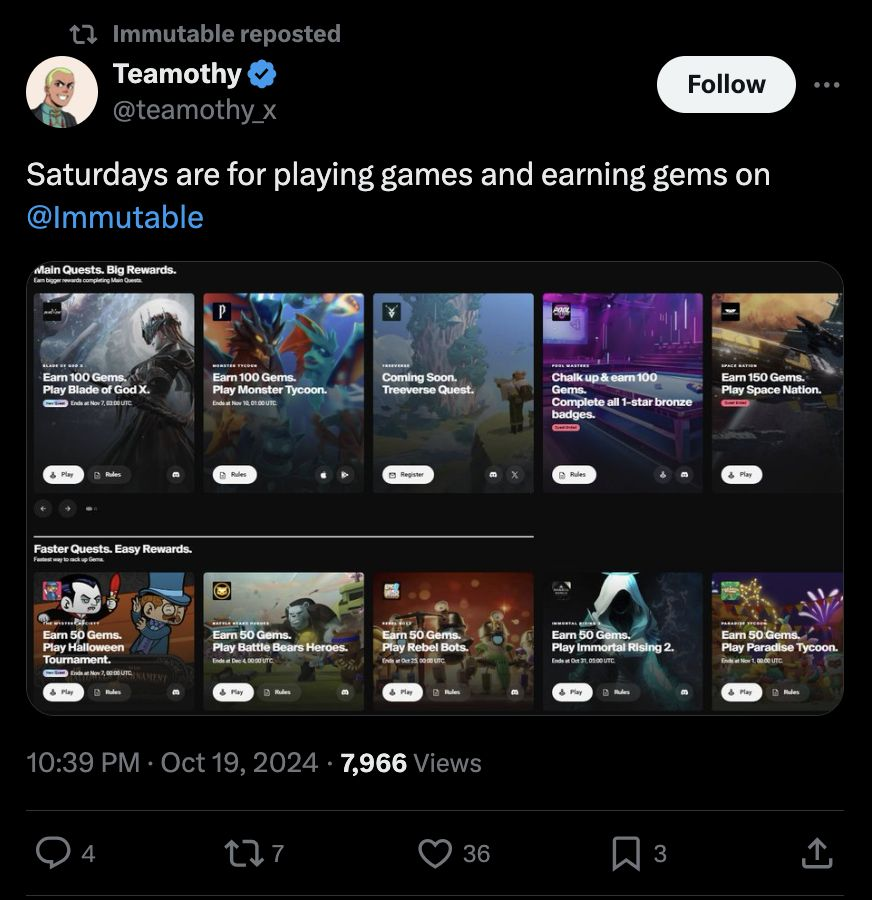
Next, the experience evolved beyond individual rewards. As games became available, users could earn Gems by completing in-game quests. This created a much more powerful loop:
Play games → complete quests → earn Gems → return to Passport → discover more games
At the same time, game studios could also use quests to promote their games, creating a new acquisition channel and a flywheel mechanism that reinforced Passport’s long-term value proposition beyond the initial growth initiative.
Don't wait for the final launch to learn
This project was deliberately run as a rapid experimentation loop. Every morning we reviewed the previous 24 hours of data in daily stand-ups and used those signals to:
develop new experiments
pull ideas from the feature backlog
adjust the strategy
decide what to test next
What the data showed
The Gems Game launched on 28 April and quickly became a significant driver of Passport activity. After launch, the majority of ecosystem DAU (daily active users) was coming from Gems.
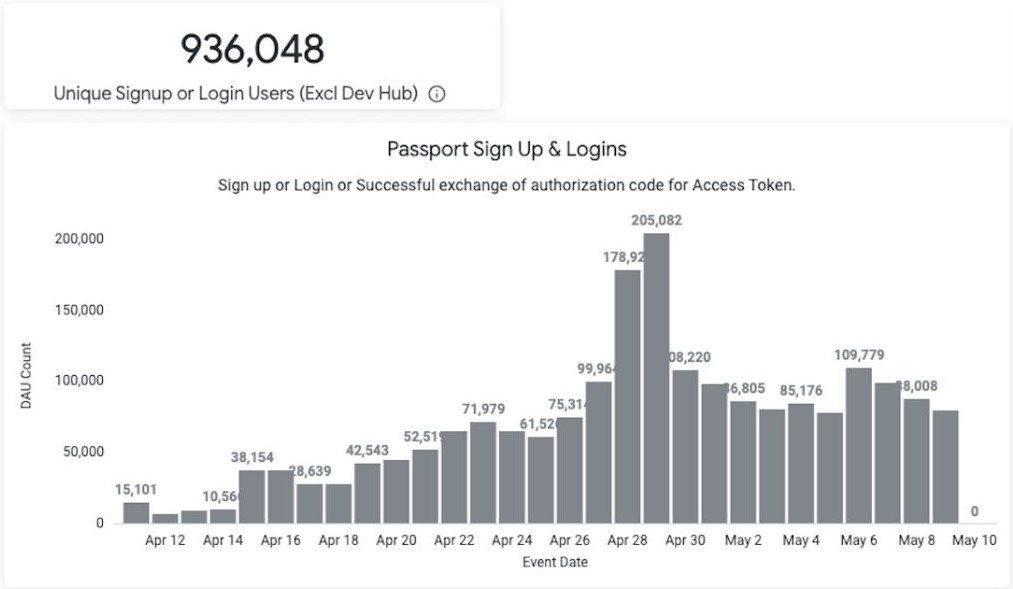
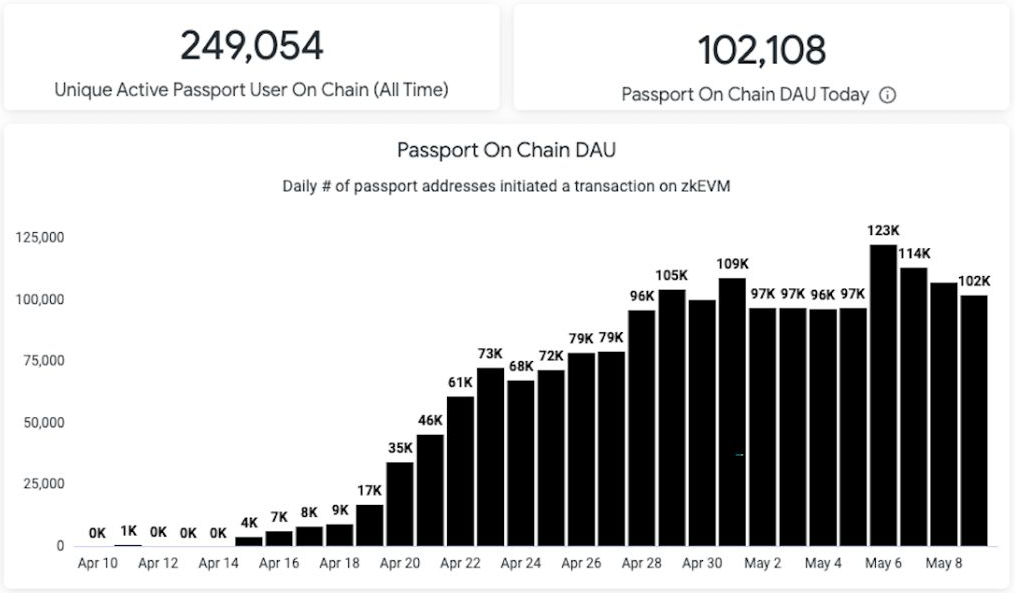
Passport activity
By early May, the wider Passport ecosystem had reached:
936,048
sign-ups
249,054
unique active users
102,108
Passport DAU
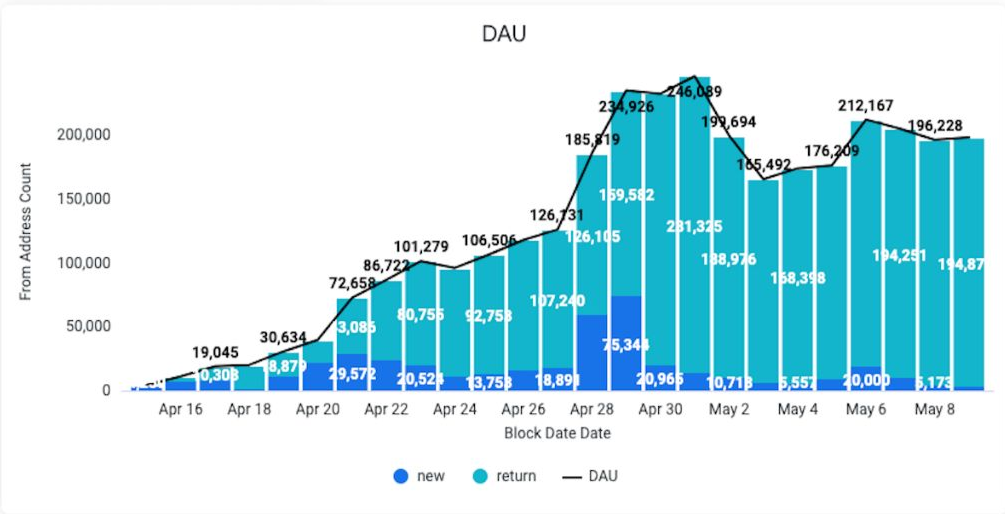
The result
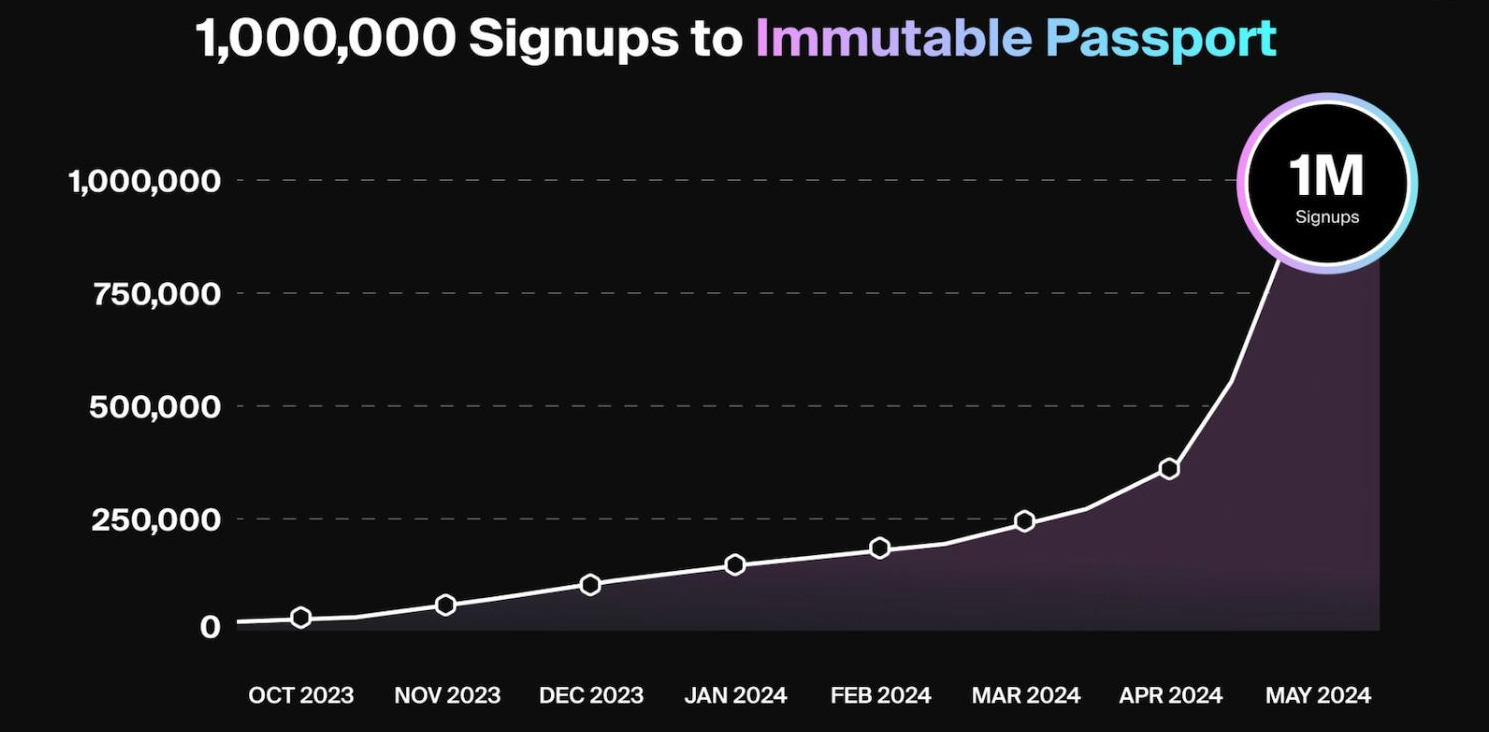
300k → 1M users in one month
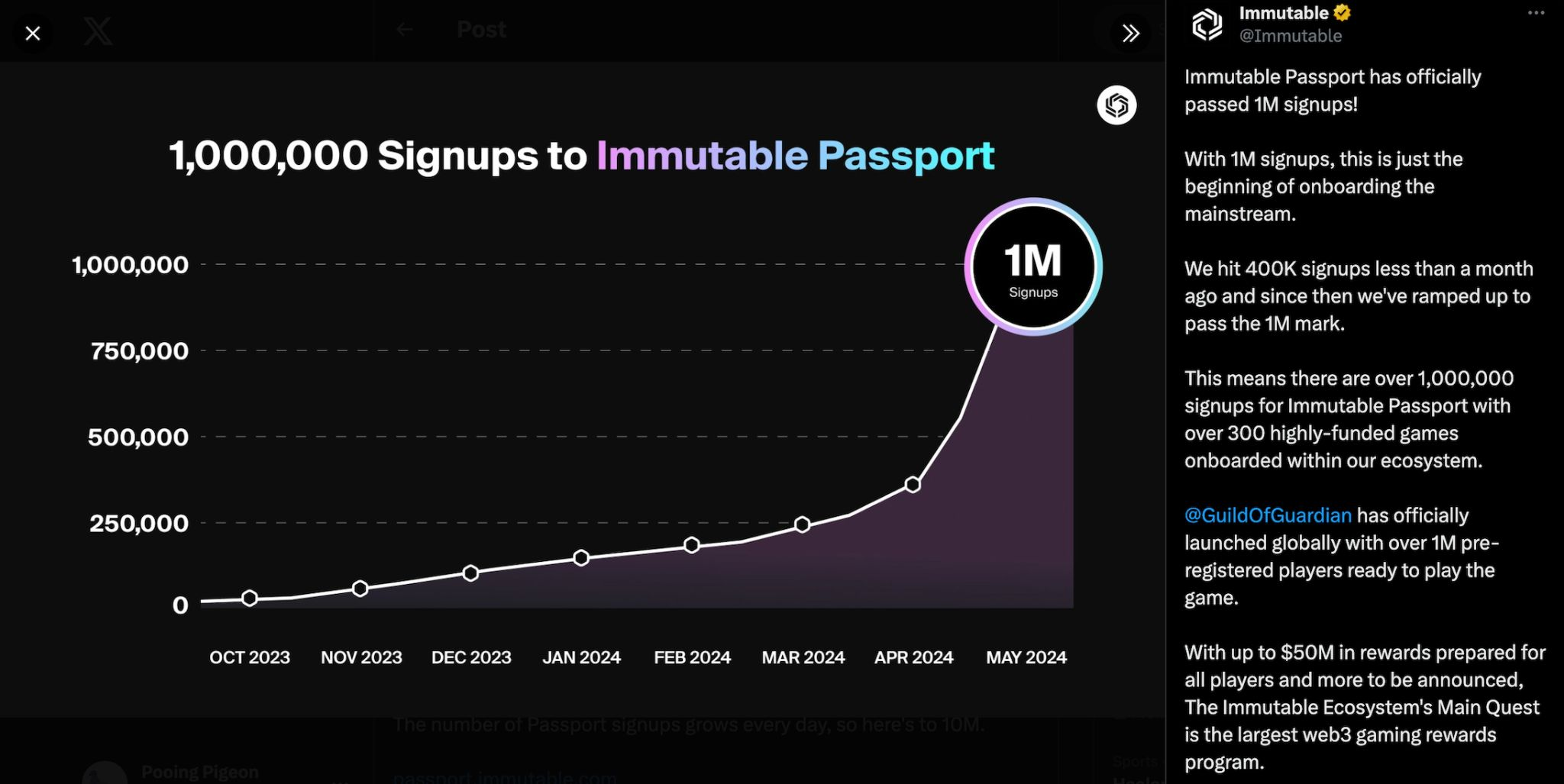
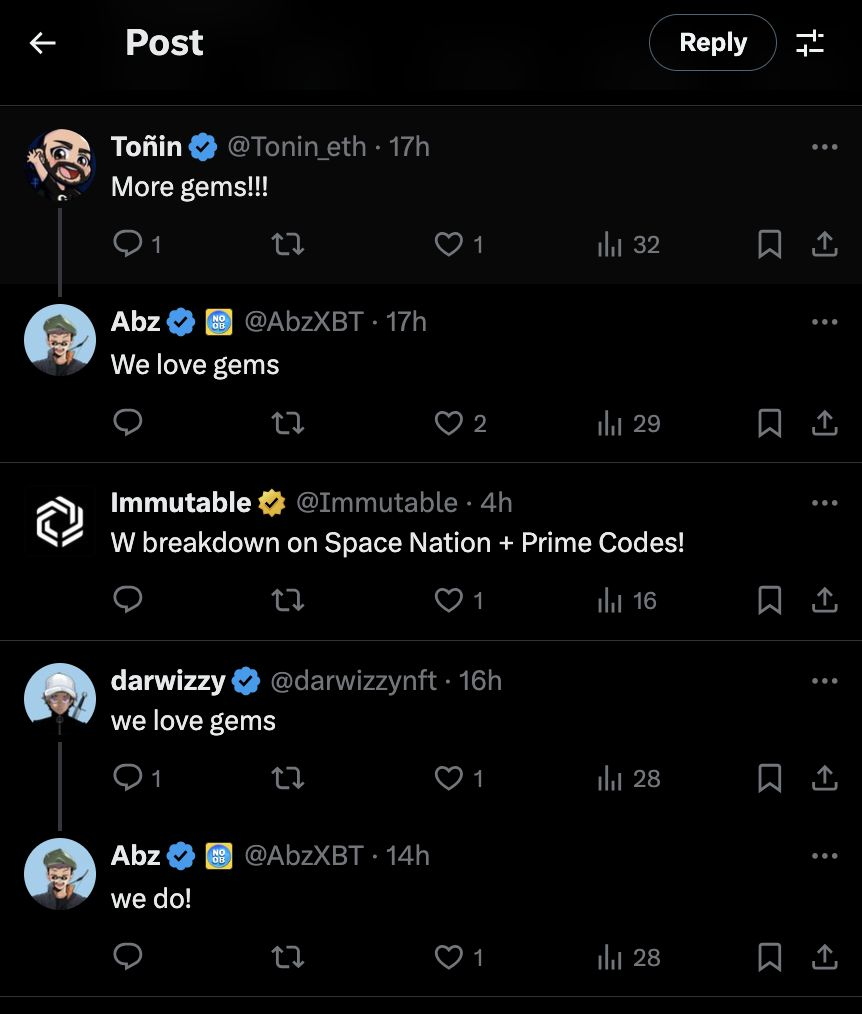
By mid May, Passport grew from approximately 300,000 to 1 million signed up users. However, the engagement didn't disappear immediately: users continued to claim Gems and share their progress publicly on X. Gem holders were later rewarded with various tokens and game-related airdrops based on their Gem balances.
What I learned
01 — Find the constraint behind the problem
The initial problem looked like a user-acquisition problem. The deeper constraint was the cold start between users and games. Solving that changed the product strategy.
02 — Design the experiment, not just the feature
The work was deliberately structured so each experiment could generate a signal and inform what we did next.
03 — Use the cheapest mechanism that can test the hypothesis
We used existing animation libraries and lightweight interactions where they were sufficient, reserving effort for the parts of the experience that mattered most.
04 — Growth mechanics work best when they reinforce the product
What started as a way to generate activity before games were available evolved into a system connecting players, games and Passport.